Skip to content
METIVERAADVISORY Client Login
Menu

CONDITION REPORTS

Condition, clearly documented.

A structured remote report of your handbag’s visible condition and authenticity, based on the photographs and records you provide. Consistent fields, defined condition grades, written findings and referenced photographs bring the evidence together in one clear digital record.

Authentication is included for supported brands and items. Remote suitability is confirmed before the assignment begins.

Request a Remote Condition Report
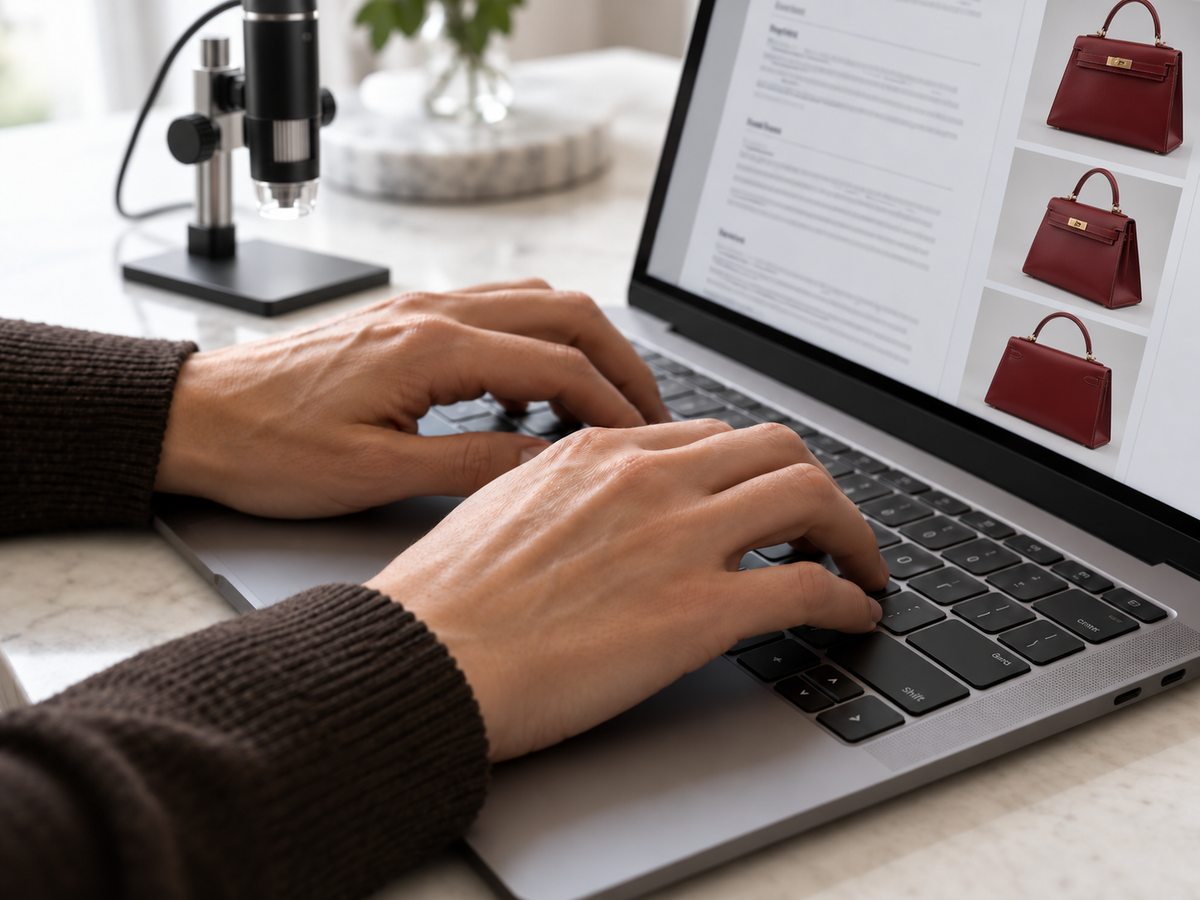
Preparing a condition report with a digital microscope beside a laptop displaying red leather handbag views

What your report includes

Four core sections follow the same structure for every object. Additional photographic evidence can be included in an appendix.

01

Object record and condition checklist

Your object’s identification, materials, colour, dimensions and measurement source, identifying marks, accessories and reported repair history. A component-by-component checklist records the visible condition of the exterior, corners, edges, handles, stitching, hardware, closures and interior, with a concise overall summary.

02

Written findings and authentication

Comments explain the location and extent of wear or damage, distinguish client statements from observed evidence, and record anything that could not be assessed. A written authenticity determination—authentic, not authentic or inconclusive—sets out the supporting evidence, references, reliance on external opinions and any further images or examination required.

03

Referenced photographic record

Overall and detail views are organized by photo ID, view, original filename and capture date where known. Captions and numbered annotations connect visible features to the written findings. Original evidence is retained; illustrative images are not used as evidence of your object’s condition or authenticity.

04

Scope and examiner record

The report identifies the client, intended users and use, review dates, evidence and methods, assumptions and remote limitations. Examiner qualifications, assistance, relevant interests or prior services, sign-off and report version provide a traceable record.

Select a section to explore

Explore the report, section by section.

Select a section to see how standardized fields, comments and photographs work together. These fictional entries illustrate the remote report format; they are not findings about the workspace image.

Illustrative sample • fictional observations
METIVERA DEMO / CR-001

Remote condition report

Visible condition + authenticity · photograph-based review

Appraisal examination workspace with an empty tissue-lined tray, camera, microscopes and documentation tools
Generated illustration. Not evidence of the fictional observations.
Condition findings and authentication are documented within the stated remote scope. No monetary value opinion is included.

01 / Object record

Keep the findings attached to the right object.

Why it matters

The object record brings together the brand or maker attribution, model, materials, colour, hardware, dimensions and measurement source, identifying marks, accessories and reported repairs or provenance. Report and object IDs identify the record throughout.

Sample entry

Object CR-001. Structured burgundy leather handbag. Dimensions supplied by the client in centimetres; not independently measured. Image capture dates unknown.

Context & limitations

Materials, official colour names, dates and provenance are identified as unverified where appropriate. An identifier, receipt or accessory does not establish authenticity on its own.

02 / Defined condition grades

The same scale, explained in every report.

Why it matters

Each component receives a descriptive grade supported by observations and photo or finding references. 4 Very good means minimal visible wear; 3 Good means light visible wear; 2 Fair means noticeable wear or damage; 1 Poor means substantial visible damage. U means not assessable and N/A means not applicable.

Sample entry

Corners and base: grade 3 (Good). Issue code AB (abrasion/scuff). References: finding F01 and photograph P02.

Context & limitations

This is METIVERA’s descriptive scale, not a universal or marketplace grade. Grades are not averaged and do not imply a monetary value. An area that cannot be assessed is marked U rather than assumed free of defects.

03 / Exterior and construction

Record the location and extent of visible change.

Why it matters

The checklist covers exterior panels and shape, corners and base, edges and glazing, handles or straps, and stitching or seams. Standard issue codes identify abrasion, stains, colour change, cracks, losses, deformation, seam issues, hardware wear and apparent repair or alteration.

Sample entry

F01 — Front lower-left corner: localized rubbing visible in P02. Extent and surrounding coverage described in the comments.

Context & limitations

Appearance alone may not establish the cause or age of wear, or confirm a particular repair method. Concealed layers and structural soundness are not established by photographs.

04 / Hardware, interior and accessories

Separate what is visible from what is reported.

Why it matters

Hardware and attachments, closures and zips, interior and pockets, and accessories presented each have a place in the checklist. Any client-demonstrated operation is identified separately from still-image observations.

Sample entry

Hardware: fine surface scratches visible on the clasp face in P03. Closure operation not assessed from the still photographs. One strap photographed; lock and keys not presented.

Context & limitations

A photograph does not establish mechanical operation, odor, feel or future durability. Not presented describes the evidence available; it does not establish that an accessory was originally missing or lost.

05 / Comments and additional findings

Give every finding room for its explanation.

Why it matters

Dedicated comment areas explain the location, nature and extent of an issue and link it to the checklist and photographs. Separate fields record client-reported history, evidence limitations, follow-up image requests and recommendations for physical examination or specialist referral.

Sample entry

F02 — Light marking visible at the interior base in P04. Client reports no prior restoration; that statement has not been independently verified.

Context & limitations

Observed facts, attributed statements and interpretations are distinguished. Missing views or poor image quality are recorded with their effect on the conclusions.

06 / Authenticity determination

A written conclusion supported by the reviewed evidence.

Why it matters

Authentication is included for supported brands and items. The report identifies the attribution assessed, features compared, evidence and reference sources, any external authentication relied upon and unresolved questions.

Sample entry

Illustrative determination: Inconclusive. Additional close-ups of the identifying marks and hardware are required before a supported conclusion can be reached.

Context & limitations

This is an independent professional opinion within the remote scope, not a brand-issued certification, manufacturer endorsement or guarantee of legal title. An inconclusive result is not represented as authenticated.

07 / Photographic record

Make the written observations easy to locate.

Why it matters

Photographs are organized by photo ID, view and orientation, source filename and capture date where known. Captions and numbered annotations identify the feature being discussed. Additional evidence can be included in a numbered appendix.

Sample entry

P02 — Front lower-left corner. Annotation 1 marks the rubbing described in F01. Original filename and capture date, or unknown date, are recorded.

Context & limitations

Original evidence is preserved. Image processing and annotations are disclosed. The generated workspace image on this page is illustrative and is not photographic evidence for these fictional entries.

08 / Scope and examiner sign-off

Understand what the report can support.

Why it matters

The report records the client and intended users, agreed use, review dates, evidence, research, methods, assumptions and limitations. The examiner record identifies qualifications, assistance, relevant conflicts or prior services, sign-off and revisions.

Sample entry

Method: review of supplied photographs and records. No physical inspection. Prepared for the named client’s collection documentation. Report ID, object ID, examiner, issue date and version are recorded.

Context & limitations

The service includes condition and authenticity findings, not a monetary value opinion or insurance coverage amount. It is not a formal appraisal. No dismantling, tactile or odor examination, laboratory testing, concealed-layer examination or load testing is performed.

Need a monetary value opinion? Explore appraisals →

Educational sample only. The observations and authenticity outcome are fictional and do not describe a client object. Your completed report is based on the evidence reviewed and its stated dates; it cannot establish later condition, concealed defects or the identity of a substituted object.

A clear record begins with the right evidence.

Tell us about your handbag and what you need to document. We’ll confirm whether remote assessment is suitable and request further photographs or recommend physical examination where needed. If you need a monetary value opinion for insurance or another defined purpose, we’ll discuss a separate appraisal scope.

Begin an Inquiry →